Step-by-step AI solutions. Ask your own question →
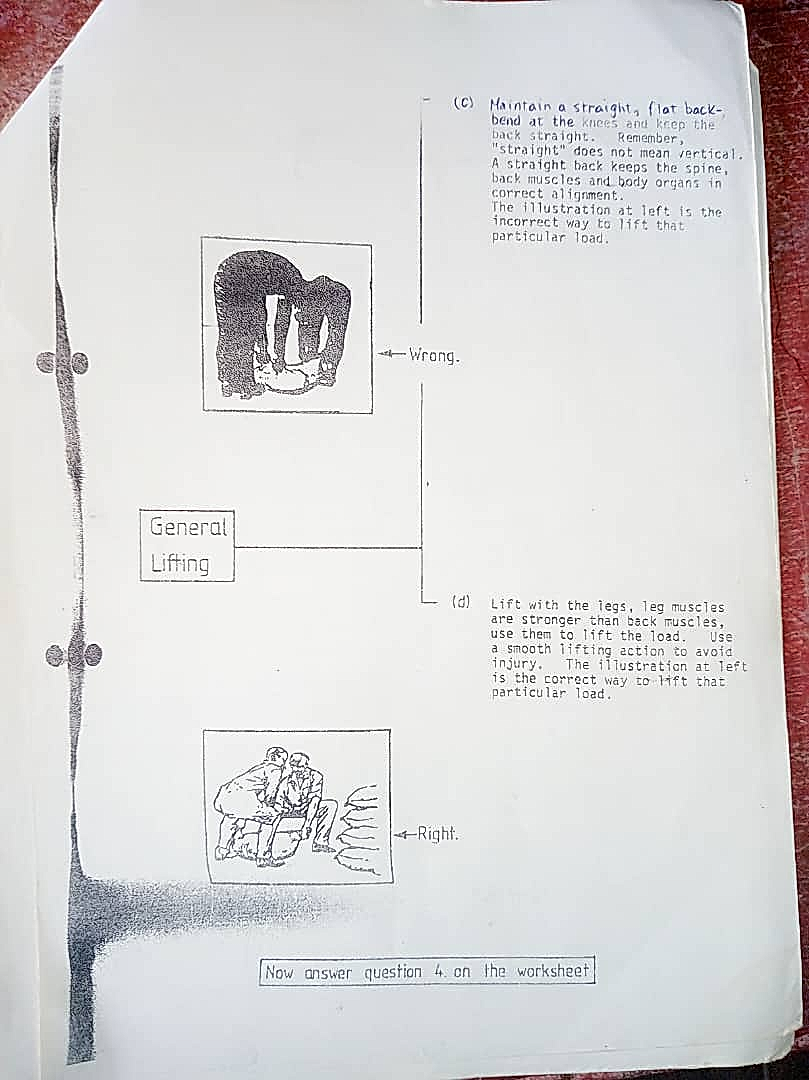
Wrong way: Bending at the back with a straight, flat back does not mean vertical. This puts strain on the spine and back…
View Solution[04/04, 22:30] Gift Juicy Mbbs🔥: A child presents with severe fasting hypoglycemia and hepatomegaly. Likely deficiency:…
View Solution[24/04, 16:03] davidolajide: Did you intentionally hang up the call [24/04, 16:04] davidolajide: Is it grammatically rig…
View Solution[5/2, 8:56 PM] ..🙂↔️ Mercy UABS: Two wires, one of copper and one of steel, each of length 1.5 m and diameter 2.0 mm,…
View Solution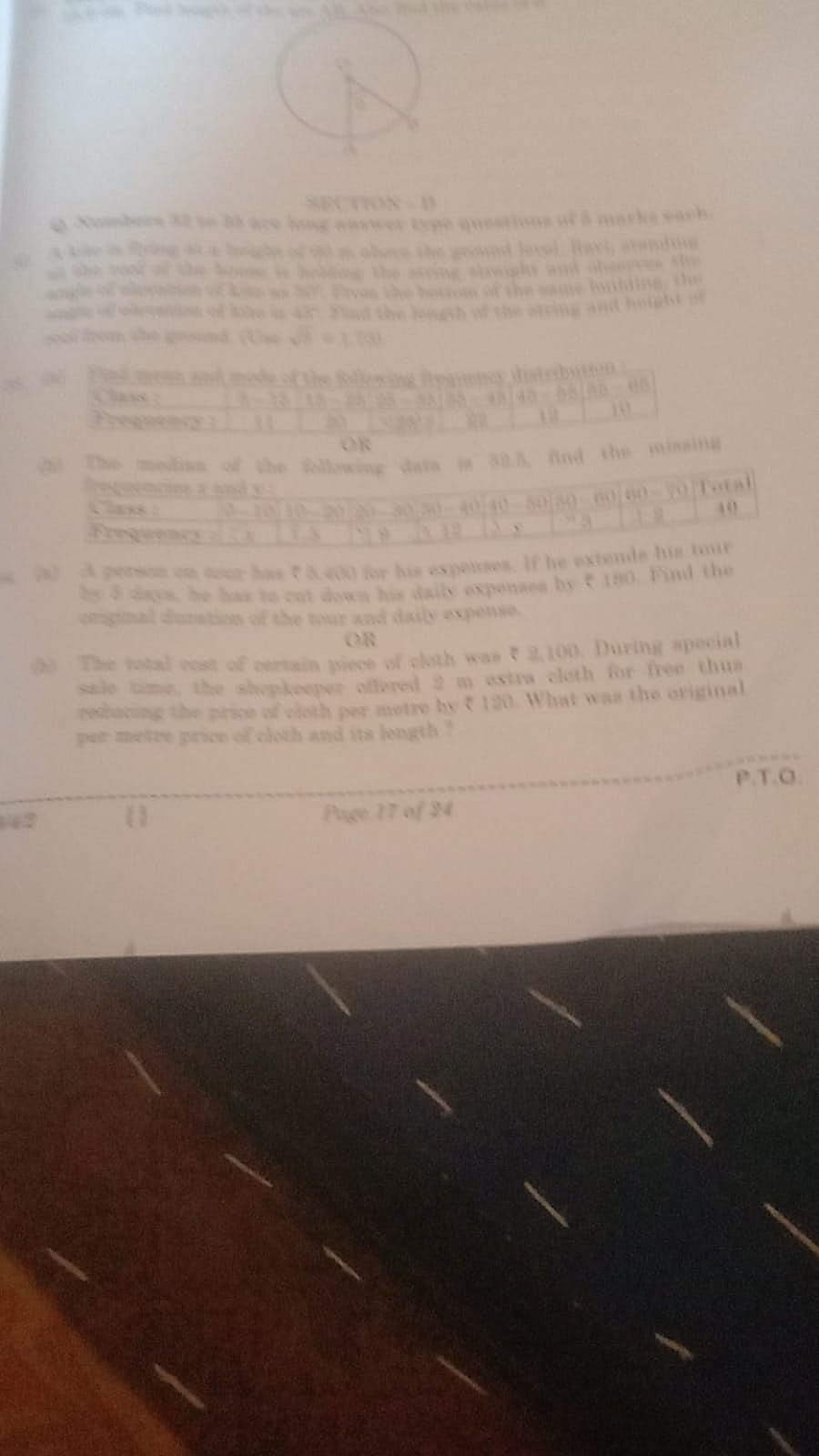
32. A kite is flying at a height of 90 m above the ground level. Ravi, standing on the roof of the house, is holding the…
View Solution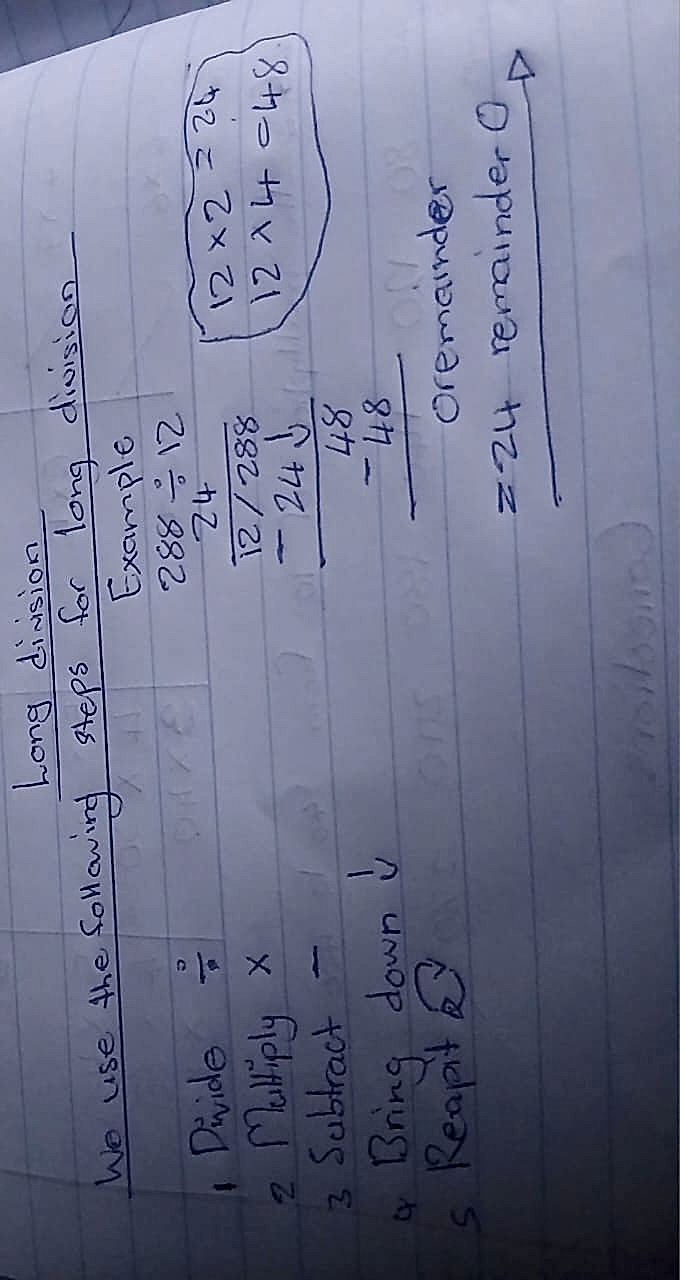
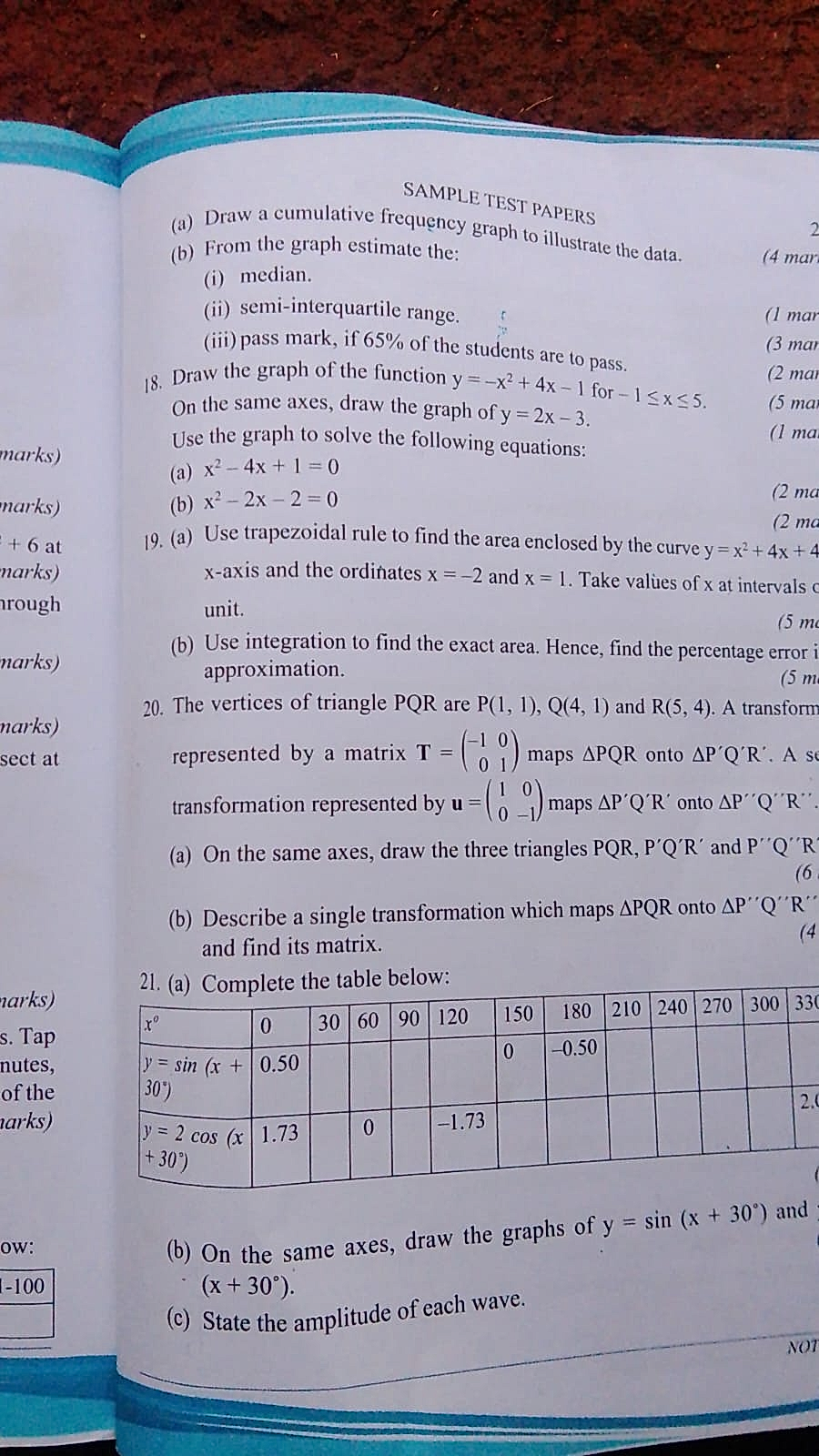
✅ Correct. The long division shown in the image for 288 / 12 is accurate. The example correctly demonstrates the steps o…
View SolutionMathematics is the foundation of logical reasoning, problem-solving, and quantitative analysis. From basic arithmetic to advanced proofs, math develops critical thinking skills that transfer to every academic discipline and career path. Whether you are working through algebra homework or tackling competition-level number theory, building strong mathematical intuition takes consistent practice and clear explanations.
Linear Equations
Solving single-variable and systems of linear equations, graphing lines, and understanding slope-intercept form.
Quadratic Functions
Factoring, completing the square, the quadratic formula, and analyzing parabolas for vertex and intercepts.
Geometry Proofs
Triangle congruence, similarity theorems, circle theorems, and constructing logical two-column proofs.
Probability & Statistics
Counting principles, conditional probability, distributions, mean, median, standard deviation, and hypothesis testing.
Trigonometry
Sine, cosine, tangent ratios, the unit circle, identities, and solving triangles with the law of sines and cosines.
Number Theory
Divisibility rules, prime factorization, modular arithmetic, and the greatest common divisor.
Word Problems
Translating real-world scenarios into equations — rate, distance, mixture, and work problems.
Sequences & Series
Arithmetic and geometric sequences, summation notation, convergence tests, and recursive formulas.
Inequalities
Solving and graphing linear and polynomial inequalities, absolute value inequalities, and interval notation.
Matrices
Matrix operations, determinants, inverse matrices, and solving systems using row reduction.
ScanSolve uses advanced AI to break down every math problem into clear, logical steps. When you snap a photo of your homework, the solver identifies the problem type, selects the right method, and walks you through each calculation so you understand the reasoning — not just the answer.
For algebra and equation-solving, ScanSolve shows every transformation: distributing, combining like terms, isolating the variable, and checking the solution. For geometry, it labels diagrams, states the relevant theorem, and explains why each step follows from the last. For word problems, it starts by defining variables and translating the scenario into an equation before solving.
Every solution includes a final verification step so you can confirm the answer is correct. Over time, reviewing these step-by-step breakdowns helps you internalize the techniques and approach new problems with confidence.
Work problems by hand before checking the solution. Writing each step builds muscle memory for exams where you will not have AI assistance.
When you get a problem wrong, do not just read the correct solution — redo the problem from scratch using the method you learned. Active recall beats passive review.
Create a formula sheet as you study each chapter. The act of organizing formulas by topic strengthens your recall and gives you a quick reference during review.
Practice mixed problem sets. Homework chapters group similar problems together, but exams mix topics. Shuffle practice problems to train yourself to identify which method applies.
Send a photo of your mathematics homework and get step-by-step solutions instantly. No app download needed.
Message Us on WhatsAppUse the quadratic formula x = (-b ± √(b²-4ac)) / 2a, or factor the equation if possible. Our AI shows every step.
The derivative of x² is 2x, using the power rule: d/dx(xⁿ) = nxⁿ⁻¹.
Use A = πr², where r is the radius. For example, a circle with radius 5 has area = π(25) ≈ 78.54.
ScanSolve's AI solves mathematics problems step by step. Snap a photo of your homework or type your question to get instant, detailed solutions with clear explanations.
Yes, ScanSolve offers free mathematics homework help with step-by-step solutions. Upgrade to Plus for unlimited answers and priority support.
How to Solve Quadratic Equations: Complete Step-by-Step Guide
Learn how to solve quadratic equations using factoring, the quadratic formula, and completing the square. Step-by-step examples with detailed explanations for students.
MathematicsWhat Is the Pythagorean Theorem? Formula, Proof & Examples
Learn the Pythagorean theorem with clear examples and proofs. Understand a² + b² = c² and how to use it to find missing sides of right triangles.
MathematicsHow to Find the Area of a Triangle: Formulas, Heron's Formula & Examples
Learn how to find the area of a triangle using base and height, Heron's formula, and trigonometry. Step-by-step examples and practice problems for geometry students.
MathematicsHow to Calculate Probability: Basic, Conditional & Bayes' Theorem
Learn how to calculate probability from basic concepts to conditional probability and Bayes' theorem. Clear examples and formulas for statistics and math students.
Get an instant AI-powered step-by-step solution in seconds.